
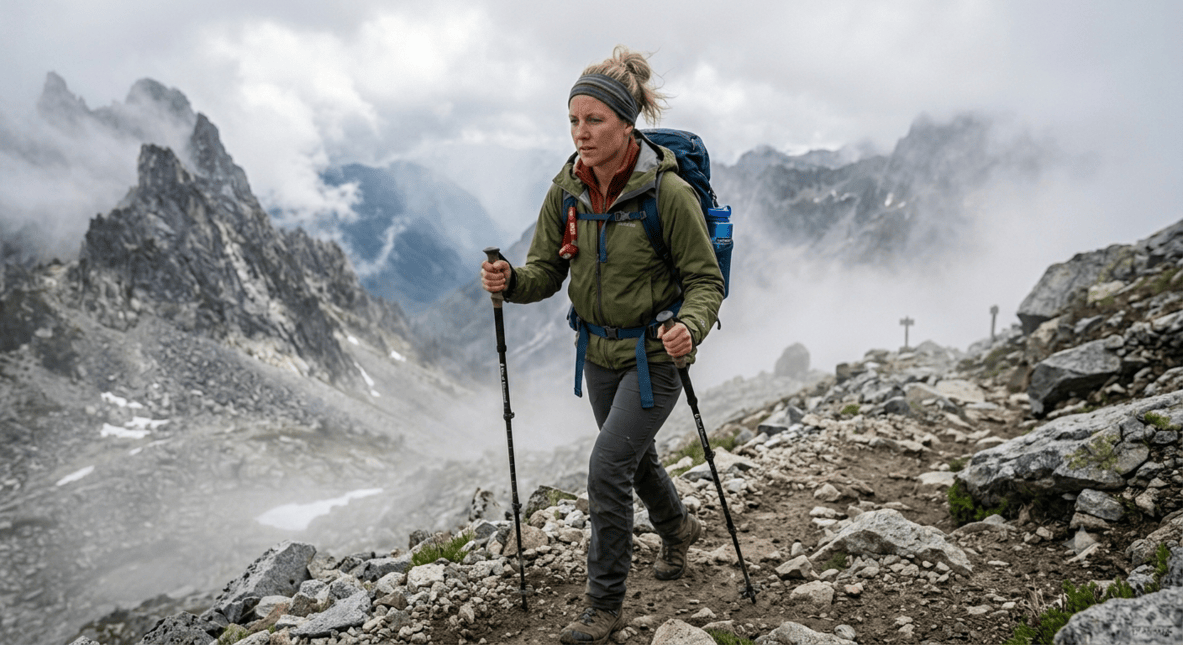
You are two hours up a trail when the sky closes in and the temperature starts to drop. Your phone, which has run the map all morning, blinks to 8% and dies. What happens next depends almost entirely on what is in your pack. A prepared hiker pulls out a layer, checks a paper map, and keeps moving. An unprepared one starts making the decisions that fill search and rescue reports.
None of that gear is large or expensive. It comes down to a short list of hiking essentials worth carrying on any trail, in any season. Most of it fits in a daypack with room to spare, and most of it stays there unused on a good day, which is exactly the point.
1. Water and a Reliable Bottle
Water is the heaviest thing most hikers carry and the first thing they cut to save weight. The rough baseline is 2 to 3 liters for a day hike, closer to a liter per hour in heat or on a hard climb. Emergency physicians put it plainly, suggesting about eight ounces every 20 minutes once you are moving. Thirst is a late signal, so sip steadily as you climb. In dry or high country, plan for more, since thin air and low humidity pull water out of you faster than you notice.
Carry it in something you trust, whether that is a sturdy bottle or a hydration reservoir, and add a small filter or purification tablets if the route passes a stream you could refill from. Reliable hydration is one of the most important parts of basic hiking safety.
2. Backup Navigation
A phone is a fine map until the battery dies or the screen cracks against a rock. The Grand Canyon alone averages around 310 search and rescue operations a year, and a recurring theme is people who followed a phone into terrain they could not read their way back out of. Great Smoky Mountains National Park, the most visited park in the country, sees 100 to 150 rescues a year for similar reasons.
A paper map and a compass weigh almost nothing and ask only that you know how to use them before you set out. Learn to take a bearing at home. A printed map of the area turns a wrong turn into a short correction instead of a long, dark detour.

3. Insulating and Waterproof Layers
Weather on a trail rarely matches the forecast at the trailhead. Temperature drops with elevation and again once the sun goes down, and a soaked cotton shirt pulls warmth out of you faster than cold air alone. Pack a synthetic or wool midlayer and a waterproof shell even when the morning looks settled.
Cold exposure is a slow problem that begins with shivering and clumsy hands and ends, in the worst cases, as hypothermia. The whole setup weighs a few ounces and stays at the bottom of the pack until the hour you finally need it.
4. A Folding or Fixed Blade
A knife is the item you do not think about until you need it, and then you need it right away. It cuts moleskin to size, opens stubborn packaging, trims cord for a quick repair, and prepares food at camp.
Hikers settle on different blades for different trips, from a small folding knife clipped to a pocket to a multi-tool with pliers and a saw, to a heavier tactical knife when a route calls for harder use. One blade, kept sharp and within reach, quietly does a dozen small jobs that would otherwise stall a hike.

5. A Headlamp with Spare Batteries
Plenty of hikes that begin in daylight do not finish in it. A late start, a slower group, or a single missed turn can leave you on the trail after dark, and moving across unfamiliar ground without light is one of the most common reasons rangers rescue lost hikers in the first place.
A headlamp keeps both hands free for scrambling or holding trekking poles, which a phone flashlight cannot match. The light also doubles as a signal, since a steady beam aimed downhill helps searchers find you. Pack one even for a short afternoon walk, and tuck spare batteries into the same pocket so a dead set never leaves you guessing in the dark.
6. A Compact First Aid Kit
Most trail injuries are small and predictable. Blisters are the most common by a wide margin, followed by ankle sprains and minor cuts, the kind of thing a few supplies can treat on the spot.
Carry antiseptic wipes, gauze, athletic tape, blister care, an elastic wrap for a turned ankle, and any medication you depend on. Keep the pack itself comfortable too, since a load over about 20% of your body weight brings on back and shoulder pain and turns a pleasant walk into a sore one. Stop and treat a hot spot the moment you feel it, because a hot spot caught early never becomes the blister that ends a hike.

7. Fire Starter and Emergency Shelter
The two items most hikers skip are often the two that matter most when a day trip runs into the night. A lighter or stormproof matches, sealed in a small bag, give you fire for warmth and a signal.
An emergency blanket or a lightweight bivy sack, the kind that folds to the size of a deck of cards, traps body heat while you wait for help or daylight. Sudden weather changes, injuries, or a wrong turn can leave hikers exposed far longer than expected. On a normal hike, both stay unused. On the rare day a sprained ankle or fading daylight keeps you out past dark, both change the outcome.
8. Trail Food and Electrolytes
Food does more than quiet hunger on a long day. Steady calories keep your core warm and your legs working, which is why guides tell you to pack more food than the route appears to call for. Pair it with electrolytes on hot or long outings, since water alone can dilute your sodium and bring on hyponatremia, a condition some hikers mistake for altitude sickness.
Simple, dense options travel best, a bag of trail mix and a couple of bars, plus a sandwich that survives being sat on. The extra few hundred calories at the bottom of the pack cost almost nothing until the day they keep you moving down the trail.

Back to That Ridge
Picture the same hiker from the start of this list, two hours up and caught by the weather. With these eight hiking essentials in the pack, the story is short. They add a layer, pull out the map, click on the headlamp as the light fades, and walk down to the trailhead a little cold and a little tired.
Those few ounces of gear turned a possible emergency into a bad afternoon. Pack the list once, keep it together in a single bag, and the next time the sky closes in, the decision is already made.

Frequently Asked Questions
What are the most important hiking essentials?
Water, navigation tools, weather layers, food, lighting, first aid supplies, and emergency shelter are among the most important hiking essentials for both short and long hikes.
How much water should you carry on a hike?
Most hikers should carry roughly 2 to 3 liters for a day hike, though hot weather, steep climbs, and high elevations may require more.
Why is a headlamp important for hiking?
A headlamp helps hikers safely navigate after dark while keeping both hands free. It can also be used as an emergency signal if needed.
What is the most commonly forgotten hiking item?
Emergency gear such as a headlamp, map, fire starter, or emergency blanket is often forgotten because hikers expect to return before dark or before conditions change.
Should beginner hikers carry emergency gear?
Yes. Even short hikes can change quickly because of weather, injury, or navigation mistakes, which makes basic emergency gear important for hikers of all experience levels.

Your thoughts on 8 Essential Items You Need to Carry on a Hike? What would be your 8 essential hiking items?
Share information from your past hikes in the comments below to always be prepared for an enjoyable and safe hiking experience.

Itishree Sahoo
Itishree Sahoo is a content writer with a keen interest in lifestyle, adventure travel, hiking, and camping. She is passionate about sharing practical advice, outdoor experiences, and travel insights that encourage readers to explore the world with confidence. Through her writing, she aims to make outdoor activities more accessible and enjoyable for adventurers of all experience levels.


Leave a Reply