
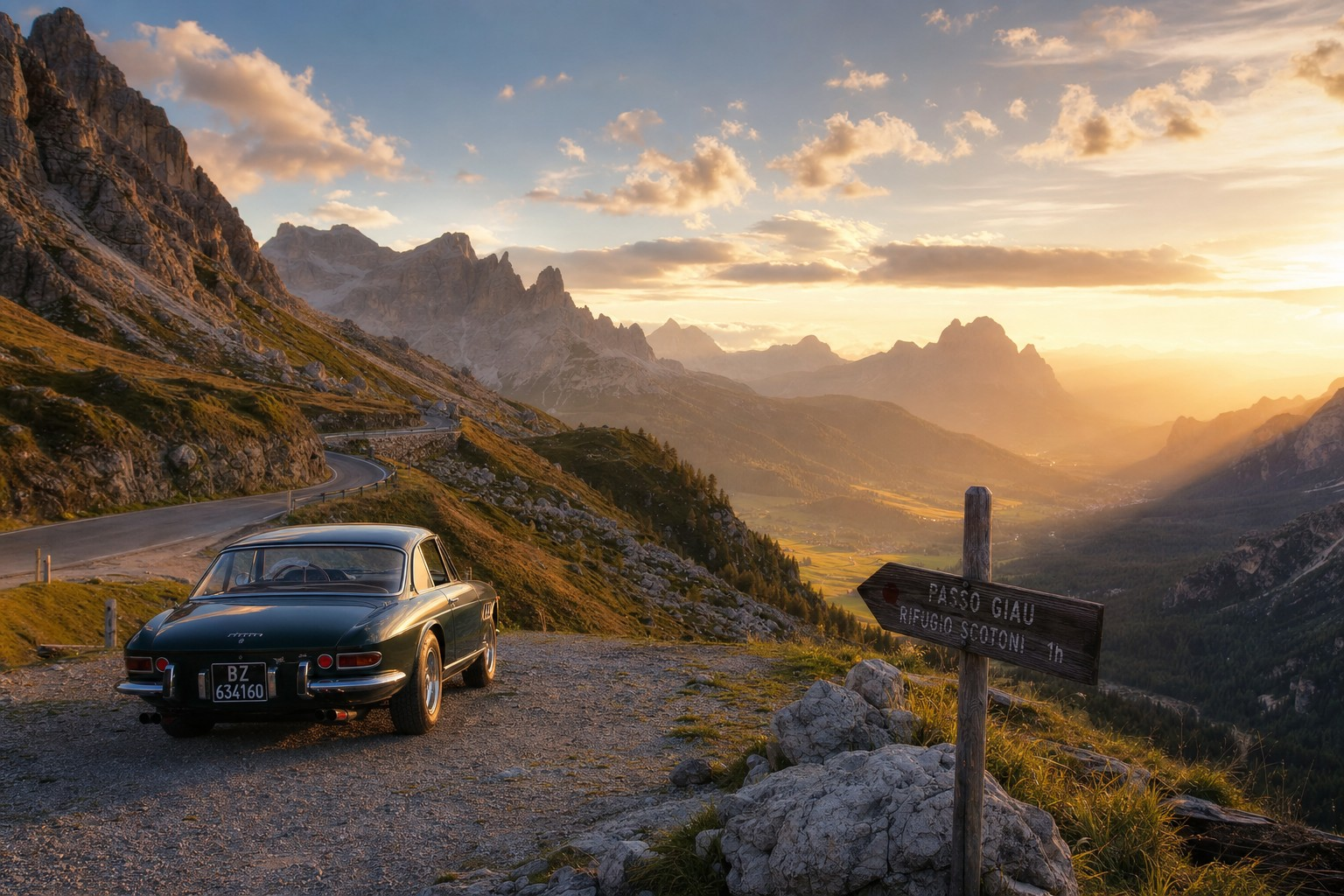
We often picture a specific version of the continent when dreaming of a trip. We imagine a Norwegian fjord holding a pale sky, or a highland trail where no footprints break the morning frost.
A coastal path on the Outer Hebrides might come to mind, filled with the sound of the wind. Yet, standard travel planning tends to deliver the exact opposite of this quiet vision.
Too often, travelers find themselves bound to coach departure windows and crossing crowded bridges.
The distance between those crowded realities and the quiet Europe of our imagination is simply the result of deliberate choices.
Closing that gap requires a completely different approach, especially when prioritizing nature-first European travel.
Finding peaceful spaces requires utilizing resources that prioritize outdoor access. Whether consulting a general European wilderness travel guide, looking into self-drive rentals, or utilizing custom-curated European travel with Tenon Tours, flexible logistics unlock remote regions.
This structured flexibility allows travelers to bypass the usual tourist circuits entirely. These four deliberate planning methods transform standard holiday routes into personal outdoor experiences.
1. Let the Landscape Lead the Destination

Most itineraries fall into an immediate trap by choosing a destination strictly by country name. Travelers default to capital cities because they offer recognized landmarks and straightforward logistics.
To find quiet spaces, outdoor travel planning should start with a landscape category instead.
Concrete landscapes immediately replace generic city breaks when planning works this way. Travelers can seek out still water in quieter inlets, far beyond the usual summer crowds.
Protected areas cover approximately 26.1% of European Union land, offering countless preserved habitats to explore.
This approach consistently points travelers toward the best natural destinations in Europe.
For alpine terrain, heading through Triglav National Park in Slovenia reveals sweeping meadows without a gift shop in sight.
Coastal wilderness waits on Scotland’s Outer Hebrides, where the Atlantic light changes rapidly. Alternatively, the wild taiga of Finland proves that the absence of sound is a worthy destination.
Landscape-led planning intentionally pulls the itinerary away from the busy tourist circuit.
| Key Insight: Choosing a landscape category, fjord, forest, or coastal wilderness, before selecting a specific destination, prevents defaulting to crowded capitals and inherently builds silence into the itinerary. |
2. Choose a Travel Style That Opens Doors

Fixed group departures carry a massive structural limitation for anyone actively seeking solitude.
Coach schedules and predetermined daily stops leave absolutely no room for spontaneous detours.
Furthermore, they prevent travelers from capitalizing on the brief weather windows that define outdoor travel at its best.
To achieve genuine freedom, individuals must select travel formats that operate inside a region’s natural rhythm.
Self-drive itineraries serve as the primary tool for gaining this unrestricted access. They provide complete freedom to pause at an unmarked waterfall or follow a single track toward an unmapped coast.
Drivers can comfortably linger in a mountain valley until the late afternoon light turns the grass gold.
This independent pacing is essential for a truly custom Europe itinerary built around the outdoors.
Private driver options offer an equally flexible alternative for those who want unhurried access without navigating foreign roads.
A local driver knows exactly which mountain pass opens first in spring. They also know which coastal overlooks most standard tourists simply drive past without a second glance.
Prioritizing this level of flexibility ensures that the chosen travel style actively serves the landscape.
3. Protect the White Space in Your Schedule

The impulse to fill every single hour of an overseas trip feels perfectly reasonable. Unfortunately, this constant over-scheduling rarely produces the journey’s most impactful or peaceful moments.
Travelers need to reframe unscheduled time as an active planning tool rather than a lazy oversight.
Since outdoor exploration is heavily weather-dependent, the best lighting rarely arrives on a strict schedule.
Consider a couple exploring the Scottish Highlands who deliberately left an open afternoon midweek.
A local pub owner drew them a handwritten map to a hidden loch that appeared in no official guidebook.
They arrived to find the rocky shore empty and stayed until the surrounding hills went dark. Those unscripted hours allowed them to discover a deeply personal connection to the terrain.
A traveler on Croatia’s Dalmatian coast once traded a planned excursion for a completely unbooked afternoon.
She followed a coastal path on foot to a sheltered cove accessible only by a narrow dirt trail. There, she swam entirely alone in water the color of pale green glass.
Building unscheduled half-days into the trip ensures these spontaneous moments have room to breathe.
| Pro Tip: Schedule at least one unscheduled half‑day per four to five days. Weather windows, perfect light, and local discoveries rarely arrive on a fixed timetable. |
4. Partner With a Nature-First Specialist

Continent-scale planning eventually requires more than personal internet research, even for highly experienced outdoor enthusiasts.
Discovering the best trailheads with permitted access or luxurious guesthouses takes significant local insight.
Off-map viewpoints known only to residents are rarely reliably assembled from public travel forums.
Understanding seasonal road conditions in the Julian Alps simply requires specialized, localized knowledge.
Securing this level of detail usually means working with a specialist who builds from landscape priorities up.
A knowledgeable partner can seamlessly assemble wilder inlets and alpine valleys into a cohesive route.
They know that almost one-fifth of the EU’s land area[1] and 10% of its marine area are covered by the Natura 2000 network.
This vast protected system guarantees that your trip remains focused on pristine wilderness exploration.
The quiet Europe of our imagination is a real geography waiting for those who know how to navigate it.
Exploring the hush at the end of a gravel road requires deliberate, thoughtful preparation. By trusting a specialized planner, individuals can safely access these environments without compromising on comfort.
The right support system ultimately allows the landscape itself to become the primary focus of the entire journey.
The Bottom Line
Closing the gap between a crowded city tour and a silent alpine trail requires intention at every planning stage.
Travelers must actively choose to let specific landscapes guide their destination choices rather than defaulting to famous capital cities.
Selecting flexible transportation and fiercely protecting unscheduled time ensures that genuine outdoor discovery remains possible.
Following these simple principles transforms a standard vacation into an extraordinary encounter with the natural world.
Europe’s remarkable natural beauty rarely appears on the heavily trodden routes that standard itineraries suggest.
It waits quietly on deserted coastal paths, deep within ancient boreal reserves, and along towering fjord inlets.
Embracing a nature-first mindset guarantees that every journey honors the quiet majesty of these remaining wild spaces.
The continent will always reveal its most peaceful corners to those willing to plan differently.
Your Thoughts to find quiet Europe?
Have you escaped to Europe in this way to maximise the outdoor experience there? Where did you find quiet Europe that resonated with you? Or is it in your plans to do this one day? Please share your views in the comments below.

Krystal Reed
I am Krystal Reed, a link building and outreach expert. I share simple and smart link-building tips to help brands grow their SEO and boost online visibility. No fluff, just results.


Leave a Reply