
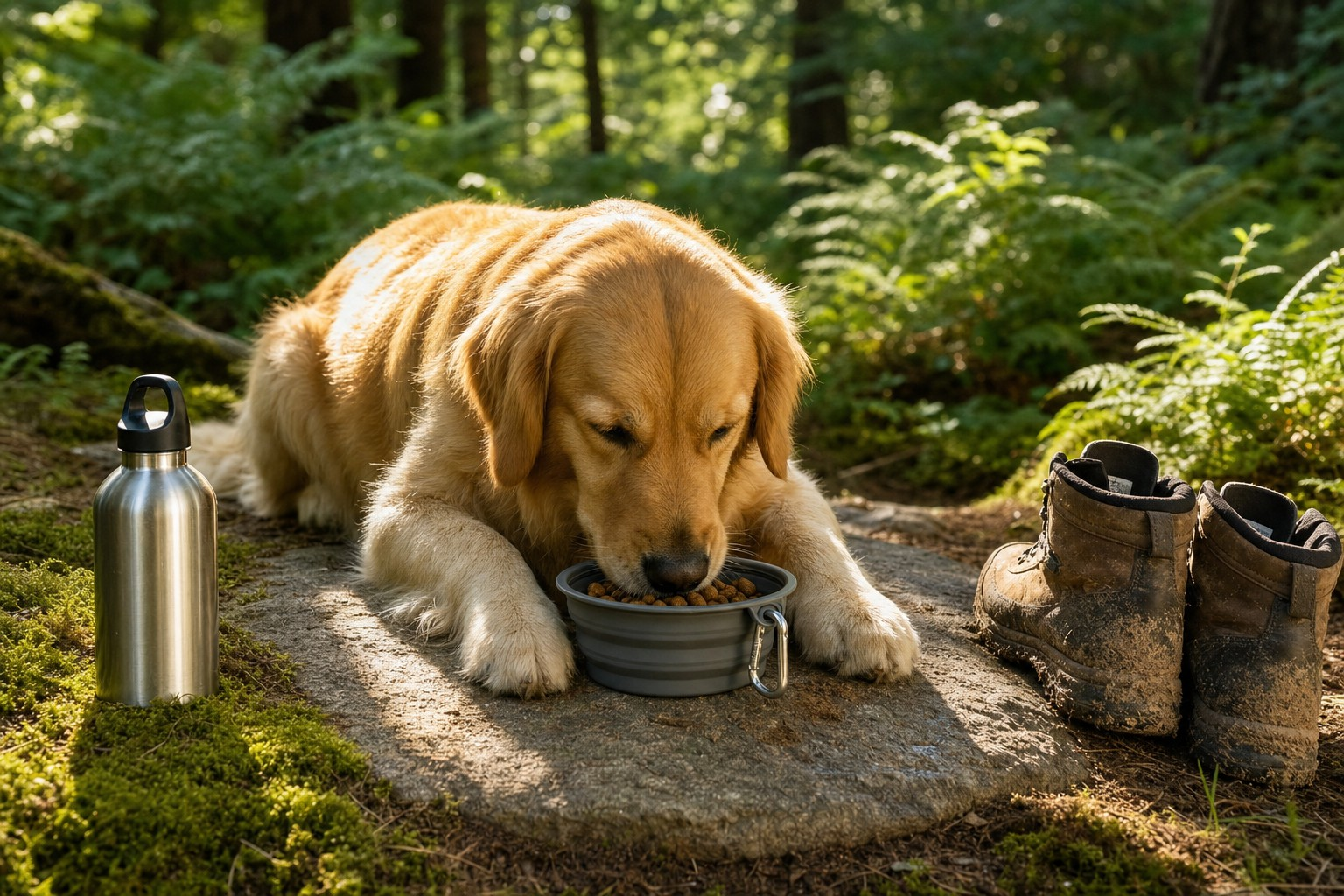
Picture a woman expertly pitching her tent while simultaneously managing her energetic golden retriever at a bustling state park.
She balances adjusting the rainfly, unpacking a heavy food cooler, finding the missing water bowl, and trying to calm her pet’s high-energy level.
This highly relatable scenario is exactly why camping with dogs requires a solid strategy to prevent early burnout.
Dog camping tips often focus strictly on trail safety, but campsite logistics are where the real daily challenges begin.
A little planning before you leave the driveway transforms outdoor logistics from a frustrating chore into a seamless system.
The following four simple tricks will make your next outdoor adventure feel completely effortless and highly rewarding.
1. Plan Portable Meals Ahead of Time
Start by addressing the classic campsite problem of a frantic search for pet food in a tiny mountain town.
The best approach to camping meal prep for dogs is doing the heavy lifting at home in your own kitchen.
Pre-portion each meal into flat, stackable containers before leaving and clearly label them by day to ensure accurate feeding amounts.
Portioning in advance eliminates the need for bulky measuring cups and prevents overfeeding after a long hike.
Pet parents seeking options with recognizable ingredients often utilize Viva Raw’s human-grade pet food for these rugged outdoor excursions.
Their pre-portioned frozen blocks can thaw gradually in a properly packed cooler and serve straight into a collapsible bowl.
This prep-ahead mindset keeps mealtimes simple, clean, and completely efficient for both you and your canine companion.
You avoid the nightmare of a torn kibble bag spilling across the dirt while a chipmunk watches eagerly.
Ultimately, planning your pet’s meals with the same care as your own guarantees a smoother campsite experience overall.
| Key Insight: Meal prep at home isn’t just about convenience; it’s a strategic move that eliminates measuring, guesswork, and stress, creating a predictable system in an unpredictable outdoor environment. |
2. Keep Food Safe in Changing Outdoor Temperatures

Temperature swings are the true wild card of feeding dogs while camping in unpredictable weather conditions.
It is critical to remember that bacteria grow rapidly when perishable food reaches the dangerous temperature range between forty and one hundred forty degrees.
Starting with a pre-chilled cooler overnight ensures your items stay significantly colder longer throughout the journey.
Use solid block ice or frozen water bottles rather than loose cubes to prevent soggy containers from pooling at the bottom.
Tossing a small refrigerator thermometer inside lets you confirm temperatures remain safely below forty degrees without any second-guessing.
You must refrigerate perishable food within two hours of serving to maintain optimal safety and prevent foodborne illness.
For dry foods, use a sealed waterproof container to lock out humidity and discourage intense wildlife interest.
Proper temperature control makes managing outdoor meals a quiet professional reflex rather than an anxiety-driven chore.
Knowing your pet’s diet is safe allows you to relax fully in your camp chair after a grueling hike.
3. Maintain Familiar Feeding Routines

Routine provides a critical physiological and psychological anchor for dogs navigating new outdoor environments and strange wildlife smells.
Experts agree you should develop a routine to give your dog a more predictable and highly comforting life.
Keep the same feeding times you use at home, even if it means setting a phone alarm mid-hike.
Once you arrive at a new campsite, immediately establish a small spatial ritual for all future mealtimes.
Designate one flat rock or a shaded patch of dirt near the tent as the official feeding spot for the weekend.
This simple behavioral trick reduces anxiety and encourages them to eat their full meal despite the surrounding distractions.
Stress-induced digestive upset can derail a weekend trip faster than unexpected rain, making consistency your quietest prevention tool.
Water consistency is equally important, so bring gallons from home for the first day and gradually blend in campground water.
Maintaining these familiar habits ensures your pet’s digestive system remains stable and healthy throughout your rugged wilderness getaway.
| Important: Never introduce a new food or protein the morning of departure. A sudden dietary change can trigger digestive upset that will derail your trip faster than a rainstorm. |
4. Pack a Compact Dog Camp Kit

Successful trips rely on a specific, well-planned kit that lives in the vehicle and easily migrates to the wooden picnic table.
Keep this kit intentional by packing a lightweight silicone bowl that doubles as a convenient trail water dish.
Add a highly absorbent microfiber towel for muddy paws and quick post-swim cleanups around the campsite.
Include a brightly colored spare leash, generous rolls of poop bags, and any daily supplements packed securely in a labeled pill organizer.
Always carry at minimum two backup meals to account for unexpected travel delays or extra hungry evenings after swimming.
Tuck in a small waterproof first aid reference card with your local veterinarian’s phone number written down physically in ink.
Adding a familiar chew or a low-stimulation puzzle toy will help your pet settle down while you relax by the roaring fire.
This dedicated kit prevents you from rummaging through multiple duffel bags every time your dog needs a quick drink.
A well-organized kit keeps your campsite tidy and ensures you are always prepared for minor canine emergencies.
| Pro Tip: Always pack at least two backup meals. A single spill, extra-long hike, or travel delay can make a spare meal the most valuable item in your kit. |
The Bottom Line
Before packing up the family tent to head home, spend five quick minutes noting what worked well and what needs adjusting.
Jot down notes regarding your cooler setup, bowl size, trail water strategy, and any specific kit gaps for future reference.
After two or three weekend trips, preparing for your pet becomes just as automatic as grabbing your own trusty sleeping bag.
Preparing a reliable system is the ultimate secret to enjoying the vast wilderness with your furry best friend.
Building a repeatable pre-trip checklist guarantees that you never leave essential gear behind in the rush of Friday afternoon packing.
By following these simple guidelines, you can turn basic outdoor strategies into lifelong joyous camping memories with your dog.
Your thoughts for effortless dog camping?
Do you take your dog with you on your outdoor adventures? Do you have any of your own tips for effortless dog camping? Please do share your experiences or suggestions in the comments below.

Krystal Reed
I am Krystal Reed, a link building and outreach expert. I share simple and smart link-building tips to help brands grow their SEO and boost online visibility. No fluff, just results.


Leave a Reply